The idea is to thin the oil paint, so that brush application can begin the painting. If possible use cross hatching and linear lines to express highlights and shadow on my subject. Build an excellent drawing. The finish with drawing is like a woodcut print. Medium used during life study would need to be solvent free and non-toxic. What I am currently experimenting with is 2 part linseed oil and one part marble dust. The key to success is if this medium is not overly smelly and if indeed the marble dust does excellerate the drying time. In addition is the surface overly oily. On a final note, the materials would need to have clean-up when arriving back home.
Category: Artist’s Banter
| Posts here are categorized as using any medium. This is where the artists discuss random elements of art in a playful and friendly exchange. |
-
Shellac + Oil Paint = Inking Solution
I wonder if it is possible to make my own inking solution using shellac and an oil paint such as Raw Umber? The ink made would become the under drawing for a finished oil painting.
-
Ground, Under Drawing then Painting
Start with stretching 12 oz cotton duck onto 12″X16″ stretcher strips. Isolate the cotton duck with a coating of Rabbit Skin Glue. Apply an oil emulsion (Rabbit Skin Glue + Marble Dust + Linseed Oil) to the cotton duck. Let all dry for a minimum of 5 days. Start your drawing using Raw Umber oil paint mixed with a drying oil medium, such as Groves’ 19th Century Copol Varnish mixed 50/50 with turpentine or the Ralph Mayer drying oil medium (1 ounce Damar Varnish + 1 ounce Linseed Oil + 5 ounces of turpentine + 15 drops of Cobalt Siccative), thin to a light cream consistency and apply using a round brush. Let drawing dry for a few days and finish with normal painting techniques or adopt a more egg tempera method if the drying time does not interfere with the finished results.
-
Reaching Back to Go Forward
I reach back in time to go forward. For example: I will be using vintage dip pens from a bygone era coupled with nibs from a bygone era. The education is to slow down, while still remaining free and still focused on detail.
-
Colored Ground
Take both an emulsion ground or Absorbent Ground/Watercolor Ground and mix in a dry pigment to bring the end result to a colored ground without effecting the binder and the grounds working qualities. The results will be the same if left out, except the surface will now be toned. Example: Raw Umber as the dry pigment for portraiture or Cadmium Red Light for landscapes. The acrylic based grounds (for watercolor) have titanium white in them and will lighted/reduce intensity for the final-colored ground. The emulsion (for oil painting) will have marble dust and better retain the original dry pigment color/intensity.
-
QoR Semi Traditional Palette
I’ve been contemplating transitioning my Winsor & Newton Professional Watercolor Gum Arabic binder palette to the newer Aquasol binder with QoR Watercolors by Golden Artist. Those colors would be, Quinacridone Violet, Permanent Scarlet, Permanent Alizarin Crimson, Nickle Titanate, Raw Sienna (Natural), Burnt Umber (Natural), Viridian, Hooker’s Green, Cobalt Blue and Prussian Blue. These colors would be either an exact match to my current W&N Professional Watercolors or the equivalent.
-
Impasto
The idea is to use Golden Artists Molding Paste. Form the dynamics of the impasto in white, then let dry. Prime the piece with W&N Oil Primer and work with normal consistency oil paints until done.
-
Grounds
I am fascinated with absorbent grounds that are specifically suited for watercolors. The two grounds I am currently experimenting with are Golden Artist’s Absorbent Ground, which is more like a white gesso and Golden Artist’s Watercolor Ground, which is more like a hot-pressed watercolor paper. The experiment is ongoing. I will be applying Golden Artist’s QoR Watercolors to these surfaces in order to judge the results.
-
Direction
I’ve been fascinated by horror and science fiction all my life. The true horror and science fiction is the life lived less than expected. My artistic approach should be based on the melancholy moments that bring to my heart a feeling of pleasure.
-
QoR Watercolor Ground
The completion of the inking of the original graphite drawing is done. The next step is to reduce the intensity of the contrast back down to the graphite drawing. The overall reason for this, because the drawing was done on D’Arches 140 LB. CP., is to prepare for QoR Watercolor painting. Each step has been done to optimize this endgame with QoR Watercolors. It was just a natural result that the QoR Watercolor Ground would reduce the inked illustration back toward the original graphite drawing.
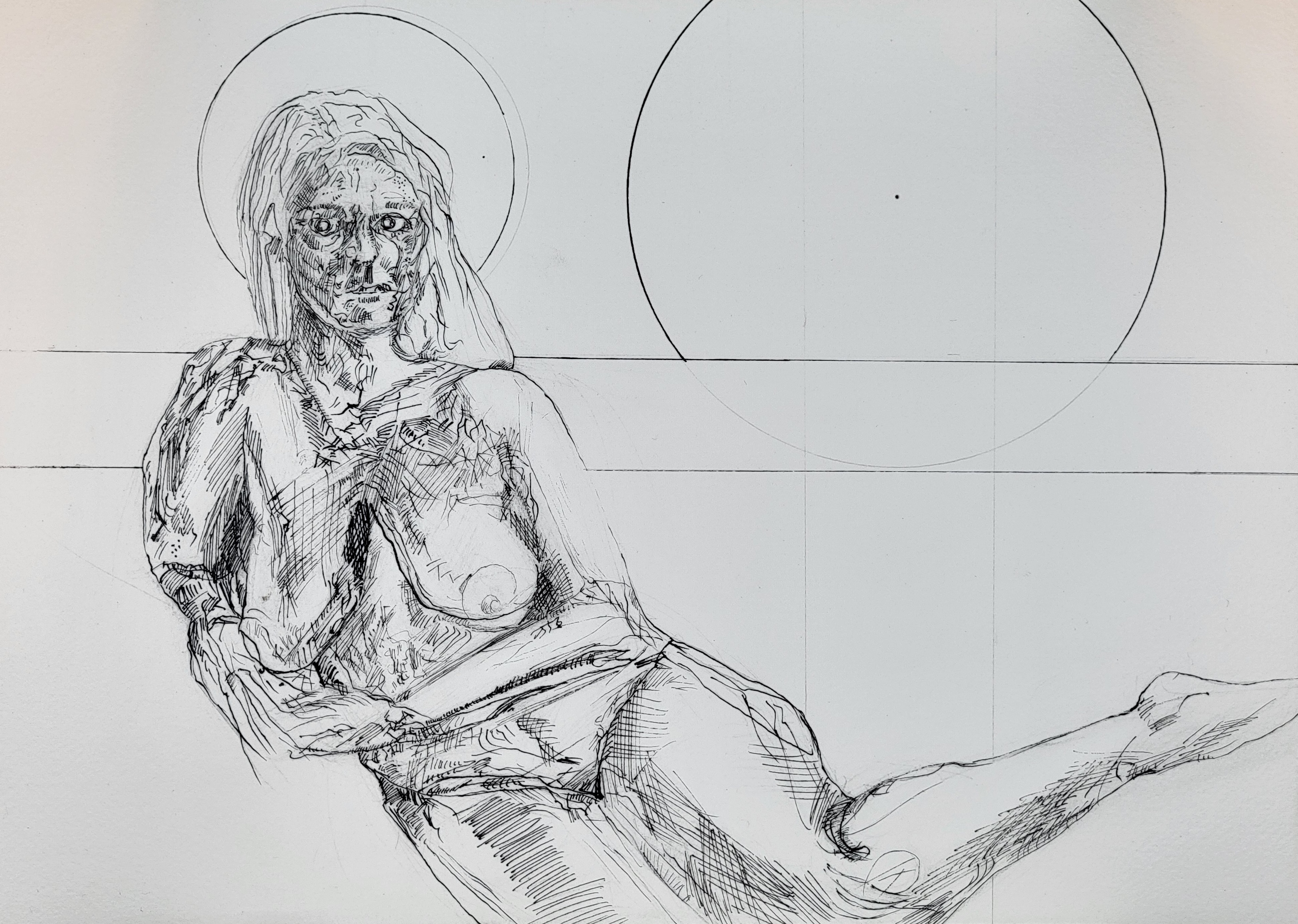
This is the image used for QoR Watercolors